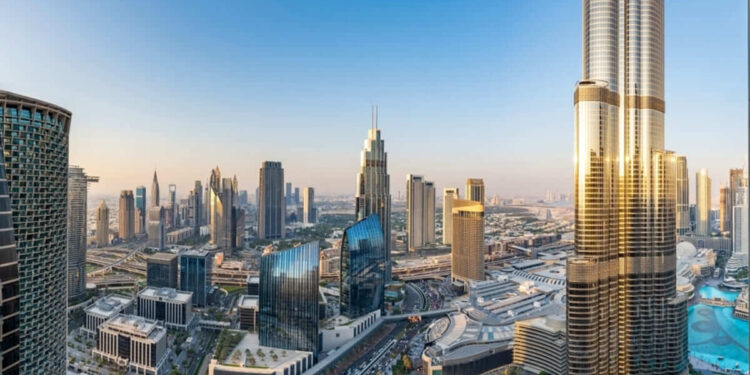
Dubai increases housing supply; a boom in apartments and a shortage of villas characterize Q3 2025.
Back to News

Dubai increases housing supply; a boom in apartments and a shortage of villas characterize Q3 2025.

MarketBy SARABEL

With a steady pace of new launches and completions matching the emirate’s growing population and sustained investor demand, Dubai’s residential real estate market continued to grow in the third quarter of 2025.

The city reported more than 10,000 new residential units launched in Q3 2025, according to the latest Dubai Residential Market report by Savills. This indicates a more stable approach to expanding the supply pipeline compared to the peak launch cycles of previous years and reflects developer confidence. According to the research, 97% of all new launches during the quarter were apartments, highlighting a broader structural shift in supply toward high-density communities where affordability, amenities, and pricing make them attractive to both investors and end users. In contrast, there were few villa and townhouse launches, which supports price resilience in the low-density market and reinforces scarcity value. Savills notes that while most of the new supply is concentrated in the apartment market, there remains strong demand for well-located villa developments, as demonstrated by the success of Phase 2 at Jumeirah Golf Estates, driven by strong demand for luxury lifestyle communities and attractive payment plan options. With around 8,500 new units delivered in Q3, the total number of completed units in 2025 so far is nearly 30,000—matching the total volume delivered in 2024. According to Savills’ research, an additional 10,000 residential units are expected to be completed in Q4, demonstrating the continued depth and diversity of the supply pipeline. Ellington House by Ellington at Dubai Hills Estate, Palace Residences by Emaar at Dubai Creek Harbour, and Viridian by Meraas at Al Wasl were among the major completions of the quarter. Savills projects that more than 250,000 new homes will be delivered by the end of 2028, positioning Dubai for what it calls a “dynamic market evolution” as the balance between supply and demand responds to shifts in lifestyle and demographics. Strong population inflows continue to support Dubai’s residential market, the research shows. Dubai’s population surpassed four million in September, and estimates suggest it will reach five million by 2030 due to growth in aviation, tourism, logistics, financial services, and the new economy sectors, along with job creation and international talent migration initiatives. Additionally, Henley & Partners predicts that 9,800 high-net-worth individuals—the largest anticipated millionaire inflow globally—will relocate to the UAE in 2025. According to Savills’ Dynamic Wealth Index, Dubai ranks as the top city in the world for attracting and growing private wealth, thanks to its appealing lifestyle, tax-free environment, Golden Visa program, and ongoing regulatory reforms. After an extraordinary surge in Q2, Dubai’s prime market saw a return to more balanced activity in Q3. Savills reports that nearly 1,500 transactions—including around 500 off-plan sales—exceeded AED 10 million during the quarter, underscoring continued interest in new luxury developments. Villas dominated prime residential activity, accounting for 73% of all high-value transactions, in contrast to the broader market trend. Despite the general move toward apartments in mid- and upper-tier neighborhoods, this highlights the continued depth of the luxury villa segment. Savills notes that the introduction of luxury projects and ongoing demand from affluent buyers helped average prices per square foot for both apartments and villas reach new highs in Q3. However, since early 2022, average capital values for apartments have remained relatively stable at around AED 1.9 million, which Savills attributes to a trend toward smaller unit sizes in recent developments. Due to limited supply and persistent demand from wealthy locals and investors, the average sale price of homes in Q3 remained above AED 7 million—up 24% from the 2024 average of AED 5.75 million. Savills emphasizes that Dubai’s residential market outlook remains broadly optimistic, though short-term investment trends may be affected by geopolitical shifts and global financial turbulence. Population growth and inbound investment continue to be fueled by the emirate’s advantages, which include political stability, business-friendly regulations, infrastructure capacity, and a high standard of living. Market observers say Dubai is entering a phase where residential market expansion is increasingly based on structural demand rather than cyclical spikes, supported by a strong development pipeline, diversified housing supply, and expanding end-user ownership patterns. According to Savills, the industry is currently “broadening in depth, maturity, and long-term stability,” making Dubai one of the most resilient and forward-looking residential markets in the world.
Dubai increases housing supply; a boom in apartments and a shortage of villas characterize Q3 2025. | SARABEL